


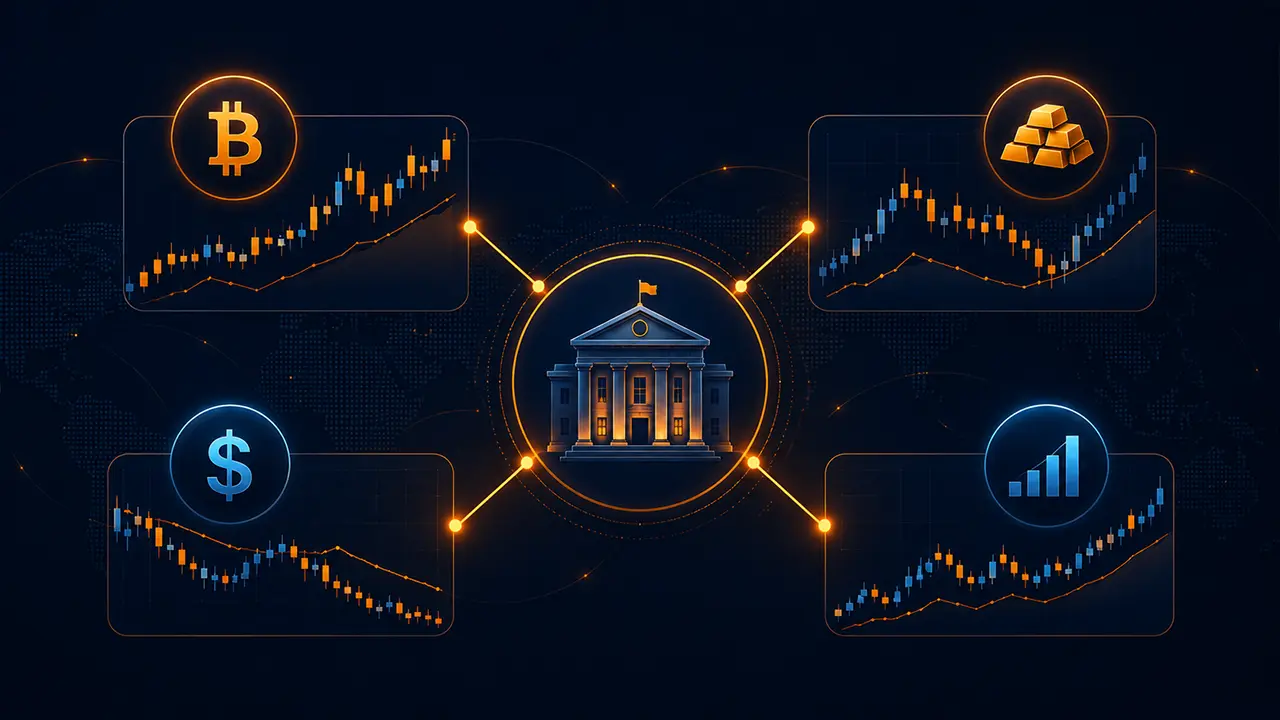
Federal Reserve (Fed) interest-rate decisions are among the most important events not only for the U.S. economy but for global markets — from crypto and gold to forex and equities. Because much of the world is priced in dollars, every move the Fed makes forms the first link in a chain. In this article, we explain step by step how rate decisions move the markets, and what a trader should watch for.
Why does the Fed set interest rates?
The Fed's core mission is to keep inflation under control and support employment. When prices rise too fast (high inflation), the Fed raises rates; borrowing becomes more expensive, spending and demand slow, and inflation cools. When inflation is contained or the economy weakens, the Fed cuts rates; money gets cheaper and activity picks up. In short, interest rates are the economy's "gas and brake pedal."
How does the chain work?
1. Rates → The Dollar (DXY)
When rates rise, the dollar becomes more attractive relative to other currencies and strengthens. The index that measures this is the DXY (dollar index). A rate hike generally pushes the DXY up; a cut pushes it down.
2. DXY → Gold
Because gold is priced in dollars, it tends to move inversely to the dollar. When the DXY rises (a stronger dollar), gold is usually pressured; when the dollar weakens, gold gets room to breathe.
3. Rates → Risk Appetite → Bitcoin & Equities
When rates are high, "guaranteed" returns like bonds and deposits become more appealing, so investors avoid risk; Bitcoin and stocks see selling. When rates fall, risk appetite rises and these assets recover. That's why crypto moves with the macro environment, not just crypto-specific news.
The tone matters as much as the decision
The market looks not only at how much rates changed, but at the message the Fed delivers. A "hawkish" tone — determination to fight inflation — can push the dollar up and risk assets down. A "dovish" tone does the opposite. In fact, even if the Fed leaves rates unchanged, the accompanying statement and any dissent in the vote can move markets sharply. That's why experienced traders watch not just "what the Fed did," but "what message it sent."
CPI and other data
A rate decision isn't assessed in isolation. Inflation data (CPI), growth (GDP), employment, and the Fed's preferred gauge, PCE, act as signals or confirmations. For example, if CPI comes in hotter than expected, the "higher for longer" expectation takes hold and the chain kicks into motion again.
What should a trader do?
On days like these, the biggest mistake is opening a reactive trade after seeing the news. Entering without a plan while volatility is high usually leads to losses. The right approach is to define in advance what you'll do at which level. At TraderLex, this is exactly what we do: we evaluate a rate decision not on its own, but alongside the dollar, bonds, gold and crypto — before the move happens, with the highest-probability scenarios in mind.
Frequently Asked Questions
If the Fed raises rates, will Bitcoin fall?
A rate hike usually pressures Bitcoin by reducing risk appetite; however, market expectations and the Fed's tone can change the outcome.
How does a rate decision affect gold?
A rate hike strengthens the dollar and pressures gold; a rate cut generally supports gold.
Why do markets move even when the Fed leaves rates unchanged?
Because the market prices the accompanying message and future rate expectations. Even a "hold" can trigger selling if paired with a hawkish tone.
This content is for informational purposes only and is not investment advice.